
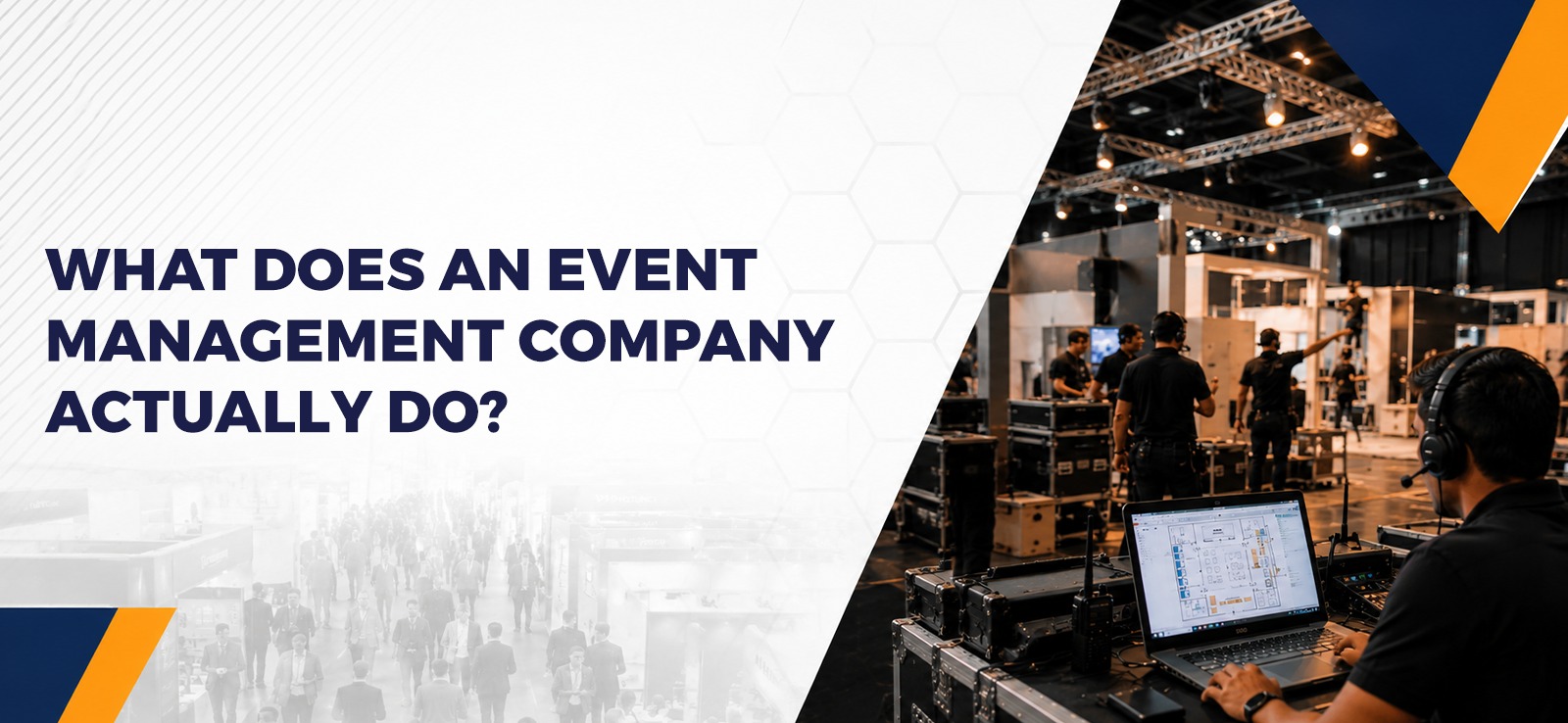
To most people, an event management company is the name on the welcome banner or the team running around with walkie-talkies on show day. What they do not see is everything happening behind that banner: exhibitor portals being set up, floor plans being finalised, check-in kiosks being tested, and dashboards being watched every few minutes to make sure nothing breaks.
Today, a lot of that behind-the-scenes work happens inside a single platform. At Expohive, we built our event management platform specifically around how a modern event management company actually operates day to day, from the first exhibitor application to the final settlement report. Here is a real look at what goes on behind the scenes, and where a platform like Expohive fits into each part of it.
It Starts With Exhibitors, Not Just a Guest List
Long before doors open, an event management company running an expo or trade show is dealing with exhibitor applications, booth requests, payments, and contracts. Traditionally, this meant email threads, PDF floor plans, and a lot of manual follow-ups.
Expohive's exhibitor management module replaces that with a self-serve portal where exhibitors can apply, pick their own booth off a live interactive floor plan, upload collateral, and pay online. For an event management company juggling dozens or hundreds of exhibitors, this means the team is not chasing paperwork. They are watching the floor plan fill up in real time and stepping in only where it actually matters.
Ticketing and Check-In: Where Most Events Fall Apart
Ask anyone who has worked on the ground at a large expo, and they will tell you that entry is where things usually go wrong. Long queues, printed lists, and manual scanning slow everything down and set a bad tone for the whole day.
This is one of the biggest reasons an event management company moves to Expohive. Attendees buy tickets online, receive a QR pass, and check themselves in at a kiosk that prints a badge in seconds. Events running on Expohive have seen self-check-in average under 10 seconds per person, with queueing at entry cut by roughly 40 percent. For an event management company managing a 50,000-footfall expo, that difference is the gap between a smooth morning and a two-hour bottleneck at the gate.
Making Networking Actually Work
A lot of B2B events promise "networking opportunities" that amount to a coffee break and a stack of business cards. An event management company trying to deliver real value for exhibitors and attendees needs something more deliberate than that.
Expohive's B2B networking module uses AI matchmaking to read attendee goals and industry interests, then suggests high-value introductions and lets people book meeting slots at branded tables before the event even starts. Events using this module have reported around three times more qualified meetings booked compared to events without it. For an event management company, this turns "networking" from a vague promise into a measurable outcome that clients can actually see in the numbers afterward.
Food, Beverage, and the Small Things That Add Up
Feeding a few thousand people over two or three days sounds simple until you are actually doing it. Long lines at food stalls, cash handling chaos, and vendors who cannot reconcile their sales at the end of the day are common headaches for an event management company.
Expohive's food and beverage app lets attendees order from their phones, top up a prepaid wallet, and pick up food when it is ready, while vendors track live orders and the organiser gets per-stall sales reporting automatically. It is a small piece of the event, but for an event management company running a multi-day expo, it removes one entire category of on-ground problems.
One Login, One Dataset, One Source of Truth
Perhaps the most important thing Expohive changes for an event management company is not any single feature. It is that exhibitor data, ticketing data, networking activity, and F&B sales all sit inside one platform instead of five disconnected tools.
This matters more than it sounds. When an event management company is managing an event with hundreds of exhibitors and thousands of attendees, having one unified dataset means the team can see live footfall, checked-in numbers, and revenue trends on a single dashboard instead of stitching together reports from different systems at midnight.
The Day Of: Watching the Numbers, Not Just the Room
On event day, an event management company using Expohive is not just walking the floor. They are watching a live dashboard: how many people have checked in, how the B2B match rate is trending, how F&B stalls are performing stall by stall. This is what lets the team spot a slowdown at one entry gate or a stall running low on stock before it becomes a visible problem to attendees.
This kind of real-time visibility is exactly why organisations like CII, FICCI, and SHRM run their expos on Expohive. It gives an event management company the operational control that used to require a much larger on-ground team.
After the Event: The Report That Shapes the Next One
Once the event ends, an event management company still has work to do. Exhibitor settlements, attendee data, and performance reports all need to be pulled together. Because everything already lives on one platform, Expohive turns this into a straightforward export instead of a week of reconciling spreadsheets from five different vendors.
Why This Matters If You Are Planning an Event
If you are choosing an event management company for your next expo, conference, or trade show, it is worth asking what platform they run on. The difference between a chaotic entry queue and a 10-second check-in, or between a forgettable networking break and three times the qualified meetings, usually comes down to the system behind the scenes, not just the team in front of it.
Expohive was built to be that system. For an event management company that wants fewer spreadsheets, faster check-ins, and real numbers to show clients afterward, it is the platform doing the quiet work that makes the whole event look effortless.